Showing posts with label Tea trip. Show all posts

Sunday, March 23, 2014

HS's Pan-fired Green Tea, Deok Eum Cha.


 During last tea making trip to Boseong, Korea, I made 3 different types of teas. I made "Korean coin tea"(떡차: Ttuk cha), "Honeyed tea flower tea", and "Pan-fired tea"(덖음차: Deok eum cha).

 Especially "Pan-fired tea" is one of the most popular type of tea in Korea. When you compare each countries' teas, you will realize that many Korean teas have "Gou-sou-han"(adj-구수한, verb-구수하다: Gou sou ha da) taste. There is no English word for this exact taste. I could probably describe it as deep roasted sweet nuttiness. Koreans are addicted to this deep taste. Other than spiciness, this taste probably is the best word to describes Korean foods. Therefor, even Korean tea plants already has some this nuttiness, people like to emphasize it more by pan-fired tea leaves.

 For pan-fired tea, tea leaves need to be roasted all by hands in dry iron pan. It is needed certain skills to roast the leaves without crush and burn, and also emphasize the aroma and flavor. Honestly, when I went to this organic tea farm, it was end of fall which is end of tea farming season as well. It depends on teas, but for Korean teas, younger, soft and earlier spring leaves make better teas. I told them that I just want to try even though it's not the season to know about tea.


So here's tea leaves that me and my mom gathered in the morning. We steamed half for coin tea and left half for pan-fired. 


Heat up special iron pan.


Check the temperature.


The owner of the farm is showing a demo.


You can only do with your hands, so we wore three pairs of gloves. For me, it was still hot.


My mom was actually good at it. (professional looking :P)


Once tea leaves loses crispness, put in on a thick wide cloth.


While the leaves are cooling down, we grabbed bunch and rolled them gently.

It was a very interesting process, because while we are rolling them, the moist inside the leaves came out and made the leaves soft.


During this process, we also got rid of some bad parts or thick stems.


And then, pan-firing again. 
Normally they are doing this whole process for seven times to make tea. 


We did only two times, because I got so hungry. :P  


Finally I tried the tea that I made. 
Leaves are quite big, since I was not a early leaf picking.


Very dark green leaves, but tea color is bright green.
The tea is very mild and smooth.
It has "Gou-sou-han"taste as Korean tea with refreshing green tea flavor. 


It is not a fine tea, but it was better than I thought.
I can't wait to try making tea again. :)




Sunday, November 17, 2013

Coin tea making - Bohyang Dawon.

So, at the Bohyang Dawon, Boseong, I tried coin tea making. Coin tea is called Tteok-cha or Don-cha in Korea, because of the way of making and looking.


Anyway, to make Tteok-cha, I picked the tea leaves, which were only on top of tea branches.


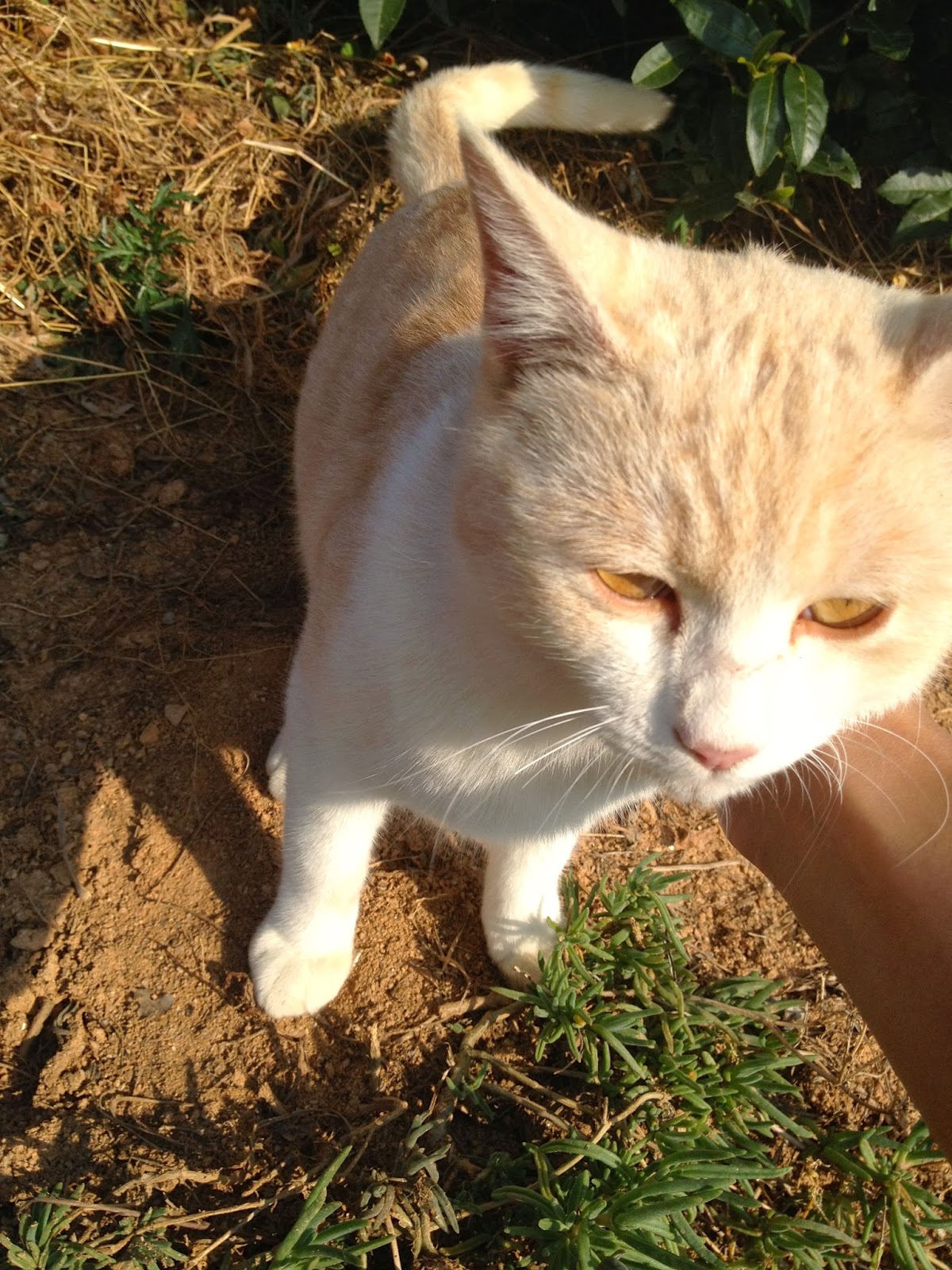
The cute kitty, "Yomy" was waiting for me to be petted. :)


After tea picking, we steamed the tea leaves until they become soft, and started pounding in a traditional stone mortar.


Pounding, and pounding.


And more pounding until they become like a rice cake. It was funny that because of pectin in tea leaves, more I pounded them, they became gummy, or rice cakish. :)


Here, super green tea ball!!!


And then, we divided them into small pieces and kneaded them a bit more.


 Compress them into this pretty tea cake mold. Press it as hard as you can!!


Voila!!!


Yummy looking little stuffs!!! 

If it was a spring or summer day, I could dry them outside. However, if the sun is not enough, it's better dry with food dryer. Otherwise they will become moldy.  


Once they dry, tie and hang them somewhere dry.


They will be fermented naturally.

The older, the better.


Wait as long as you can!!


Here's the information about Tteok-cha from "Tsiosophy".

http://www.tsiosophy.com/2012/04/report-on-the-2012-korean-tea-exhibition-tteok-cha/

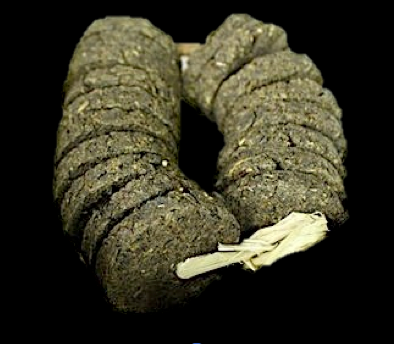
Tteok-cha 떡차 is an ancient form of tea, the leaves usually steamed, pounded, and compressed into a small cake.  Caked tea was first recorded in China as bingcha 餅茶 during the Three Kingdoms period, circa third century A.D.  Then as now, the making of caked tea was time consuming, labor intensive, and expensive.  Given its cost and rarity, tteok-cha was prepared and served with regard and ceremony as part of high etiquette, and the drinking of the brew was considered special.  In Korea, caked tea was once called byeong-cha 병차 and was likely introduced during the Samguk era before 500 A.D. as a precious import to the peninsula from the continent.


Tteok-cha strung on a cord

Long ago, tteok-cha was named after the food known as tteok 떡, the Korean rice cake made in the tenth lunar month from newly harvested grain.  Rice cake is made from very fine rice flour mixed with pure water.  The white dough is steamed and then pounded and rolled to make a thick rope of dense paste.  Allowed to dry slightly, the roll is cut into small rounds and used in cooking.  Put in broth, stir-fries, sauces, seasonings, and other traditional dishes, cooked tteok is a soft, chewy pasta especially celebrated as a customary food during holidays and festivals.

The many parallels between caked tea and rice cake are striking.  Caked tea is not only similar to the making of rice cake but it is also alike in shape, the pieces resembling flat, thick disks the size of a large coin.  Indeed, during the Joseon dynasty, tteok-cha was also known as jeon-cha 전차 or jeon-da 전다, “coin” tea.  And like the various forms of rice cake made for special occasions, caked tea comes in many different shapes, including rounds, squares, rectangles, pentagonals, hexagonals, octagonals, flowers, and even buns and cones.


HS

Tea making trip to Boseong, Korea


Hello!

This November 1st, I went to Boseong to try tea making. 

Boseong is known for its beautiful tea farms, because of its fertile land and warm weather. 

Also many Korean dramas(Soap operas) were filmed here.


Beautiful green mille feuille!!


Normally most of tea leaves are picked from May to August. Only few farms let you do tea picking in November.

Even though there are no baby leaves for higher quality teas, November is a season of tea flowers and seeds. 


After all the research, I could find the place that still picking tea leaves.

Bohyang Dawon(보향다원) is one of the farms still had some new leaves for coin tea making.

This third generation organic tea farm is the first and the only place that developed "Gold green tea".

Bohyan Dawon feed the special gold liquid(Colloidal gold) to its tea trees.

Normally we think edible gold is only for its look, but the gold in this special mineralize fertilizer can reach in human

veins and helps antioxidant and immune system of human body.

So the owner recommends me to eat them all after making tea. :)


Here's the link of Bohyang Dawon.

Sadly only in Korean.

http://www.bohyang.com/


Tea trip to Taiwan - 2


Jiufen, a mountain city that was used as a model in the anime Spirit Away, also has beautiful tea houses.

You can have a nice tea time and watch sunset on top of the Jiufen hill.


HS


Tea trip to Taiwan - 1


We went tea trip to Taiwan this October.

Many lovely tea stores in Yongkang street!!

Especially we fell in love with "Lin's ceramics studio".


Check their artistic high quality tea products.

http://www.aurlia.com.tw/


HS